Learn to Cook Using Assistive Technology Devices and Techniques
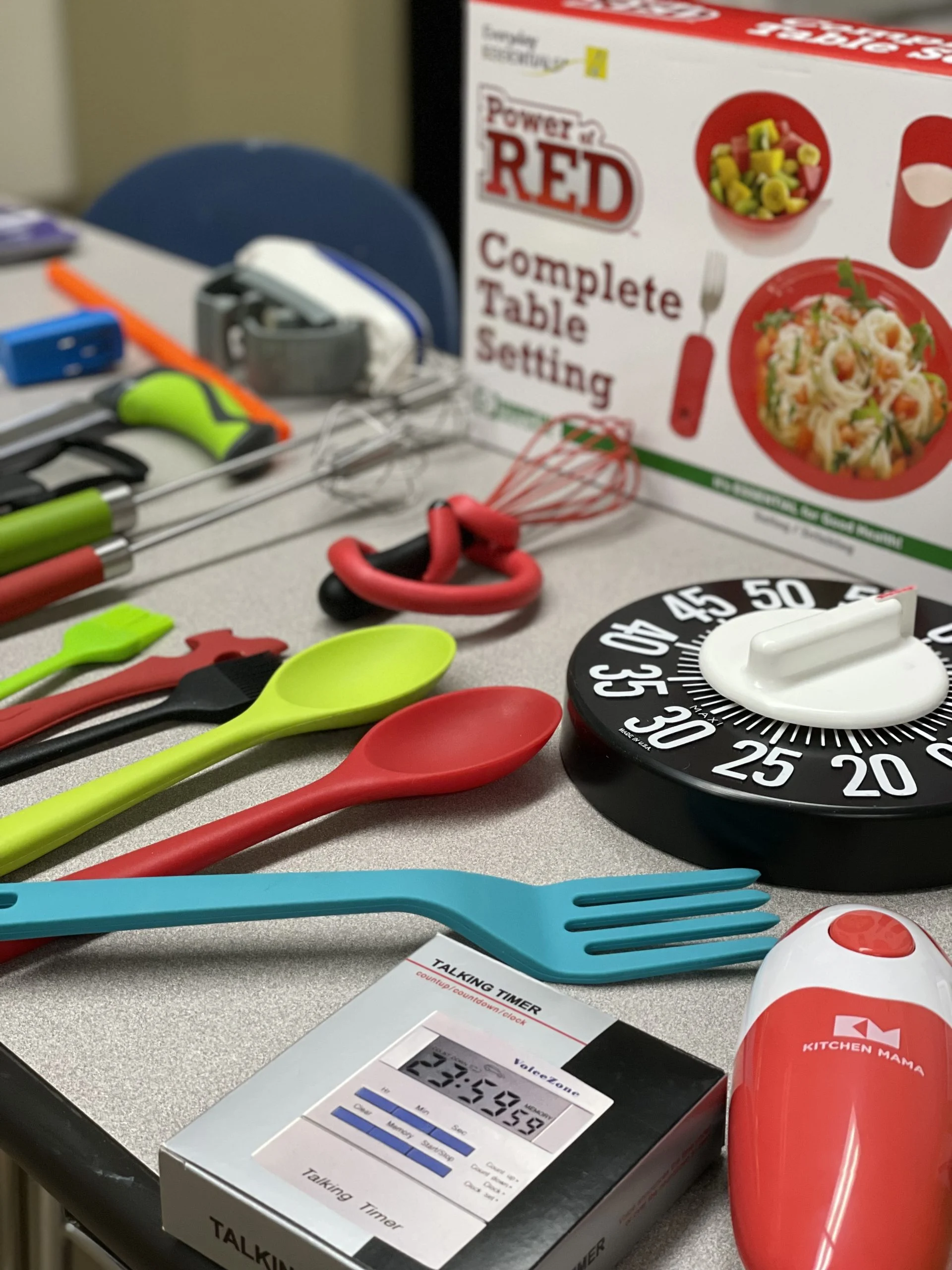
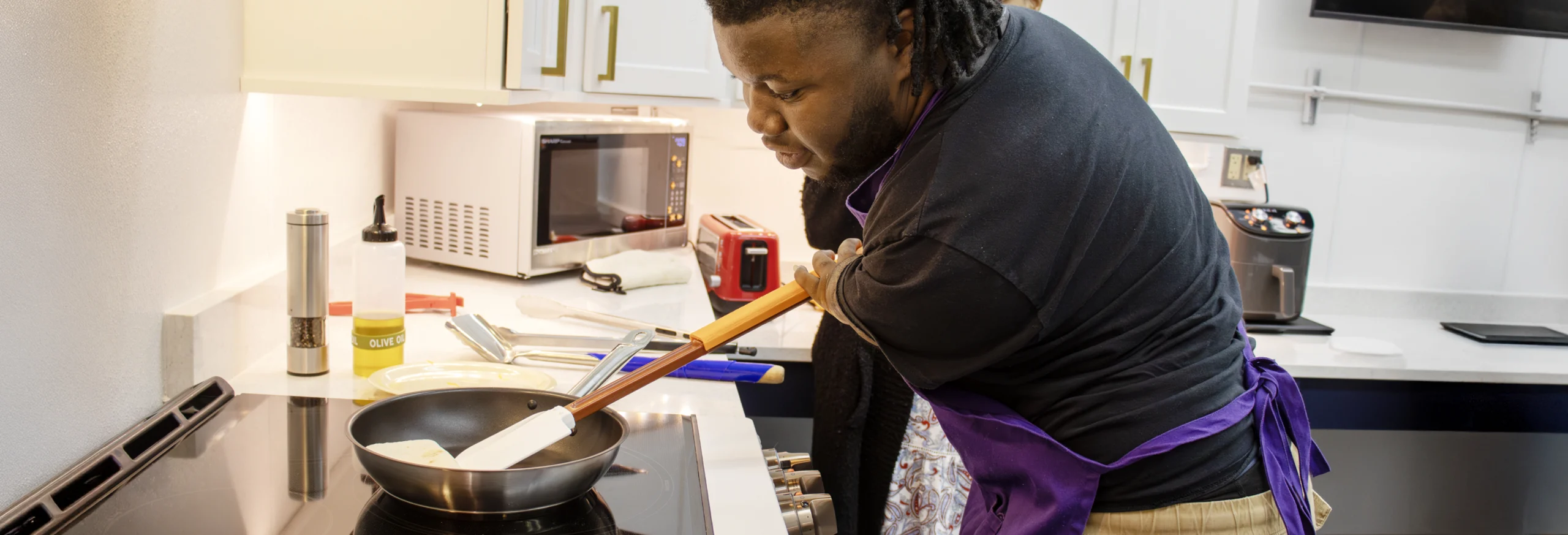
The Tech Kitchen program helps eligible customers with disabilities learn about and choose appropriate assistive technology tools necessary for developing and/or improving their cooking skills and confidence in the kitchen. Program participants use adapted tools while learning cooking techniques and strategies with professional guidance and instruction. Our team includes a Professional Chef, Occupational Therapy staff, and other IATP assistive technology professionals working as a team to best meet the participant’s needs.
Program Requirements:
Participation in the Tech Kitchen Training Program is currently open to persons who meet all of the following requirements:
- Receive services from specific departments within the Illinois Division of Rehabilitation Services (DRS):
- Department of Rehabilitation Services (DRS/DORS)
- Vocational Rehabilitation Bureau of Field Services (BFS)
- Bureau of Community Care and Blind Services (BCCBS)
- Home Services Program (HSP)
- Are at least 14 years old
- Are referred by their DRS Counselor. If needed, you can ask your counselor to contact us for more information.
- Complete the IATP Tech Kitchen intake process
- Participate in an initial assessment visit either onsite in the Tech Kitchen, in-person at your home, or virtually.
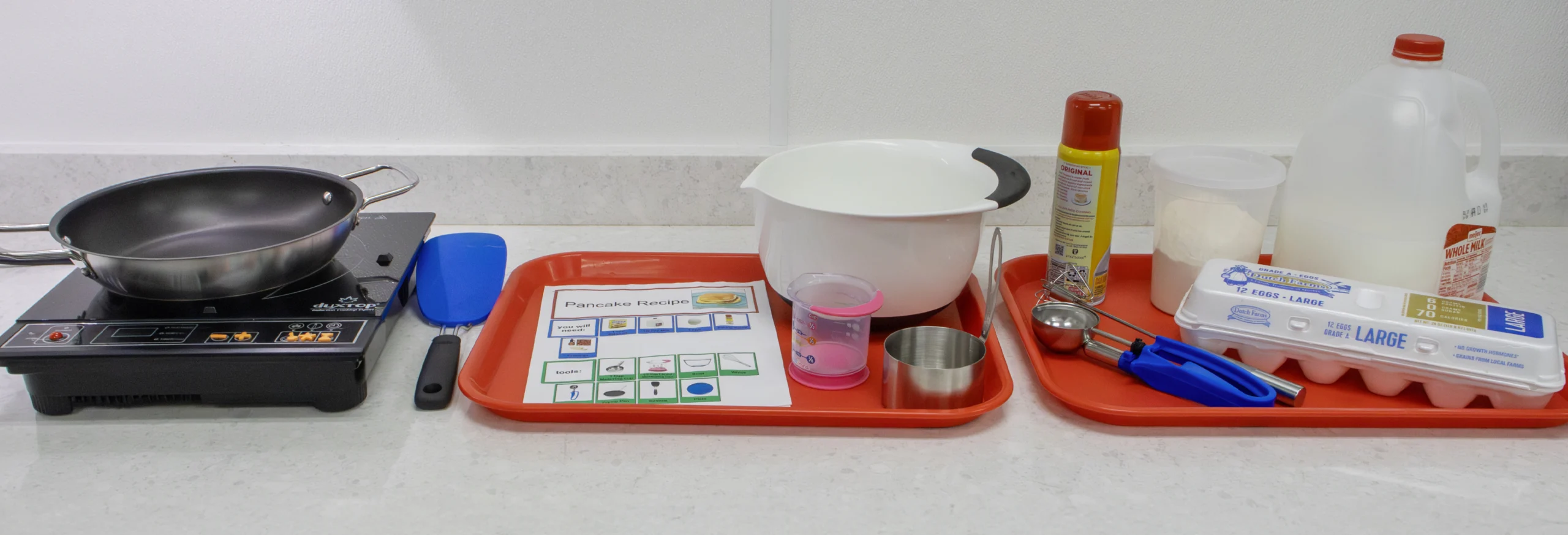
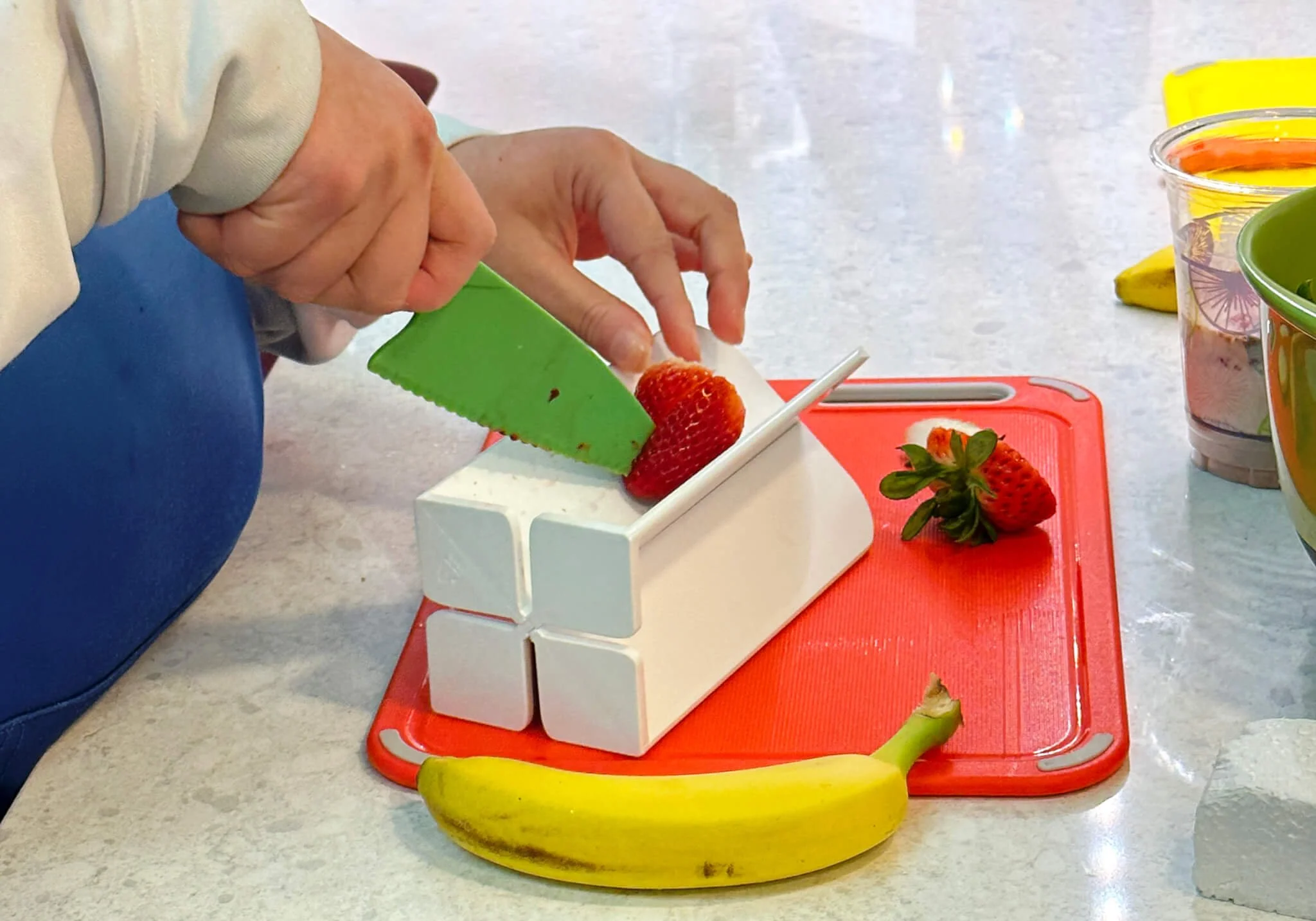
Tech Kitchen Spotlight
College Students Gain Cooking Confidence
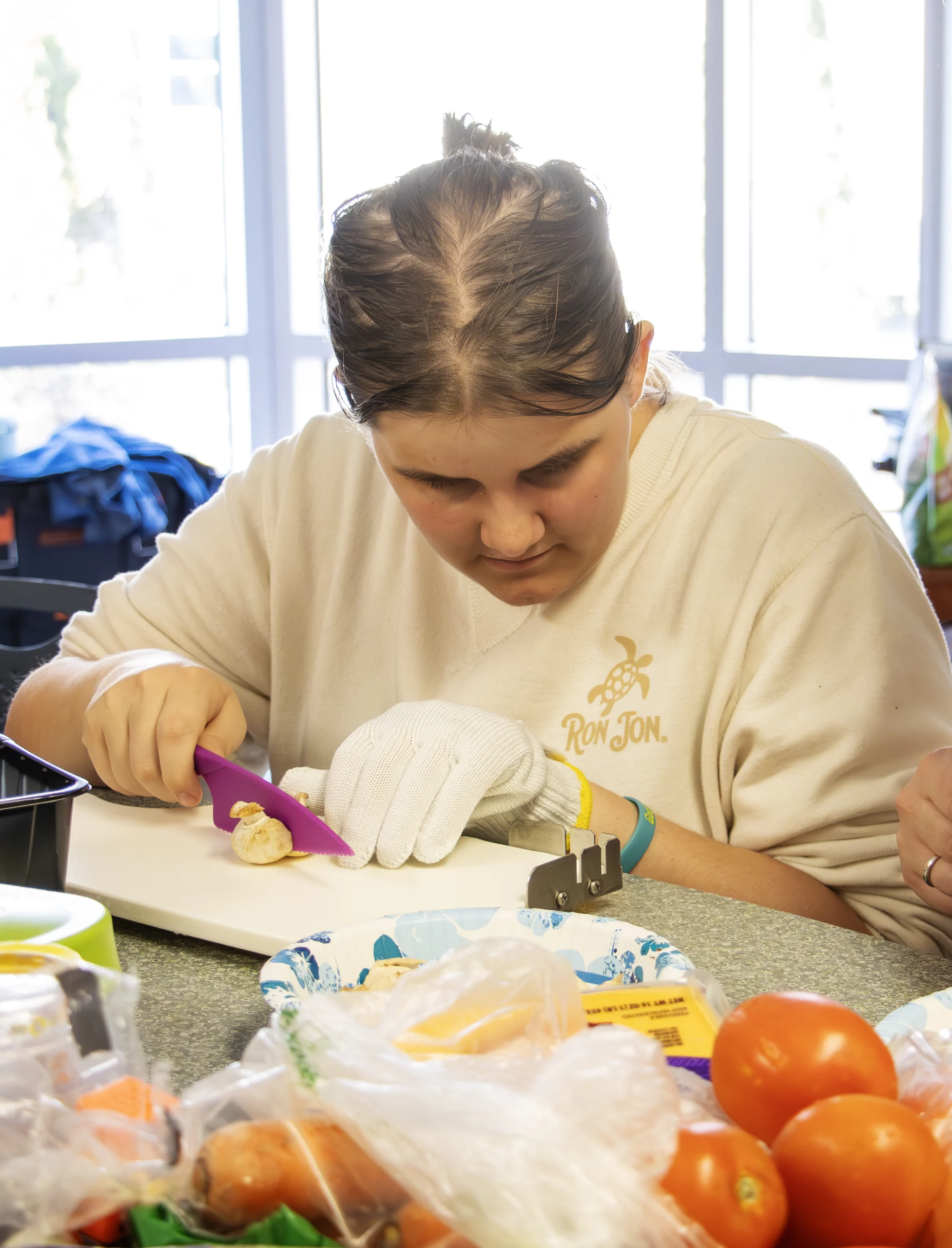
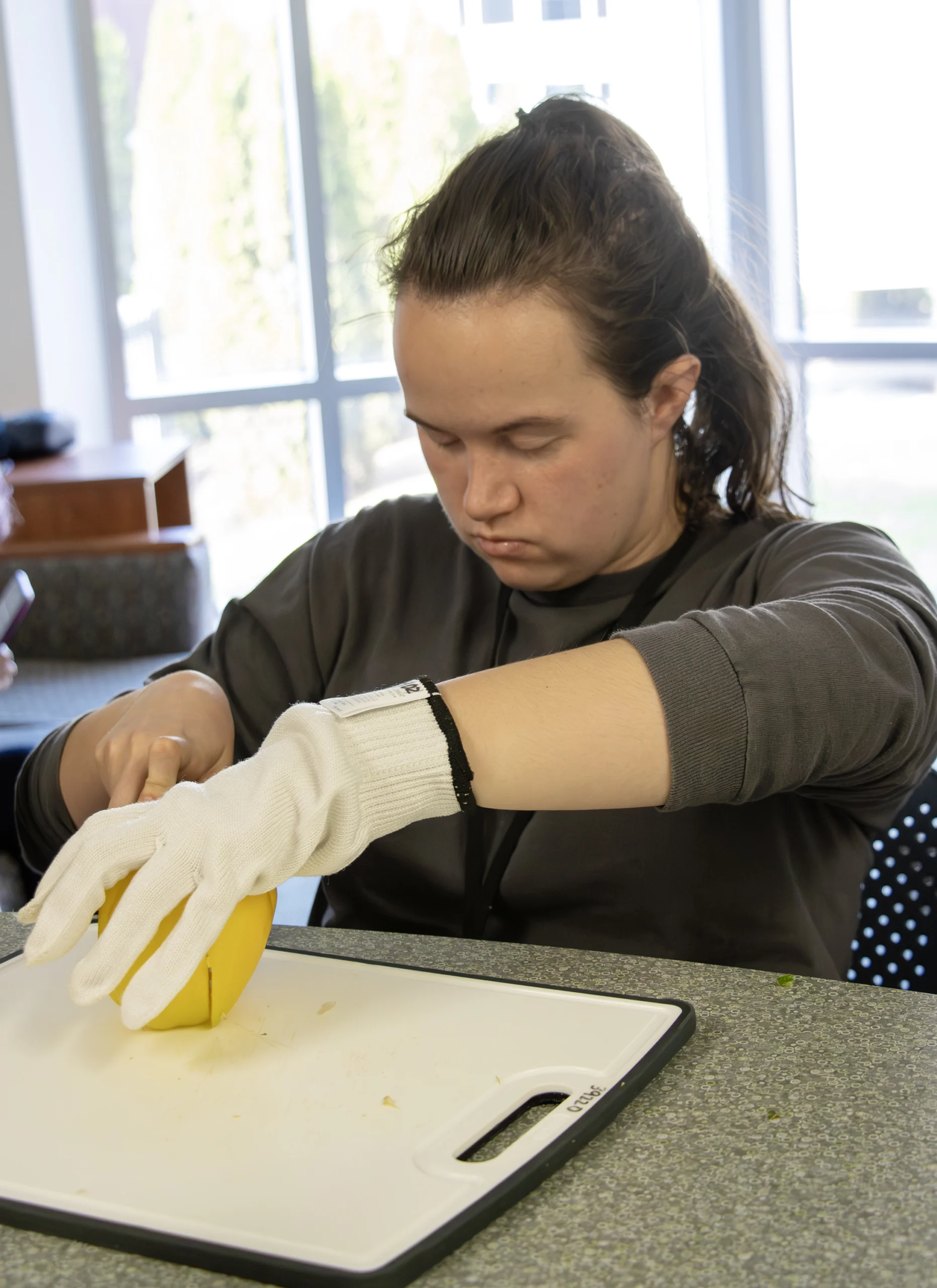
Kaity chops mushrooms with a suction cup board safety glove and nylon knife
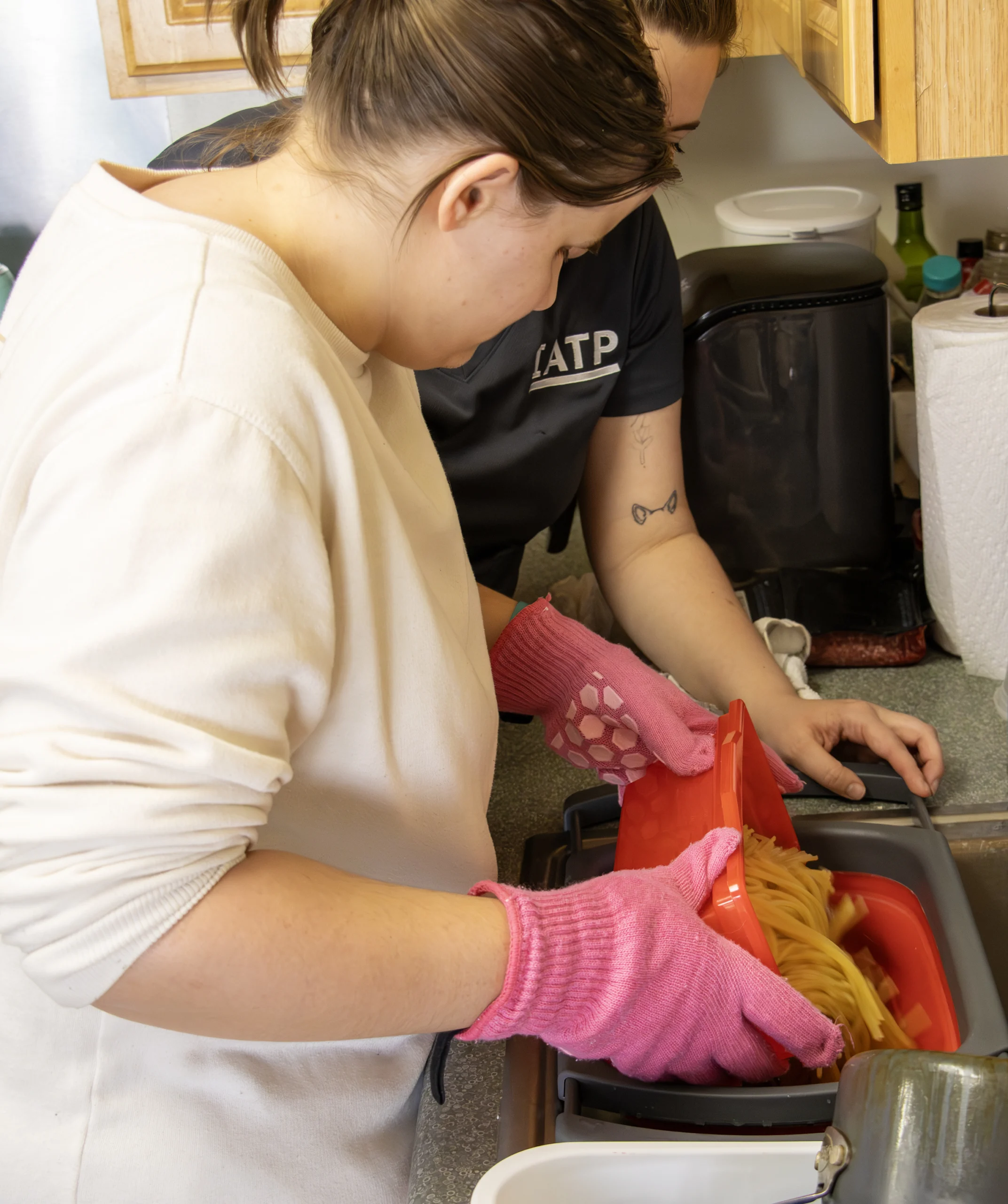
Kaity drains spaghetti into an over the sink collander while wearing heat safety gloves
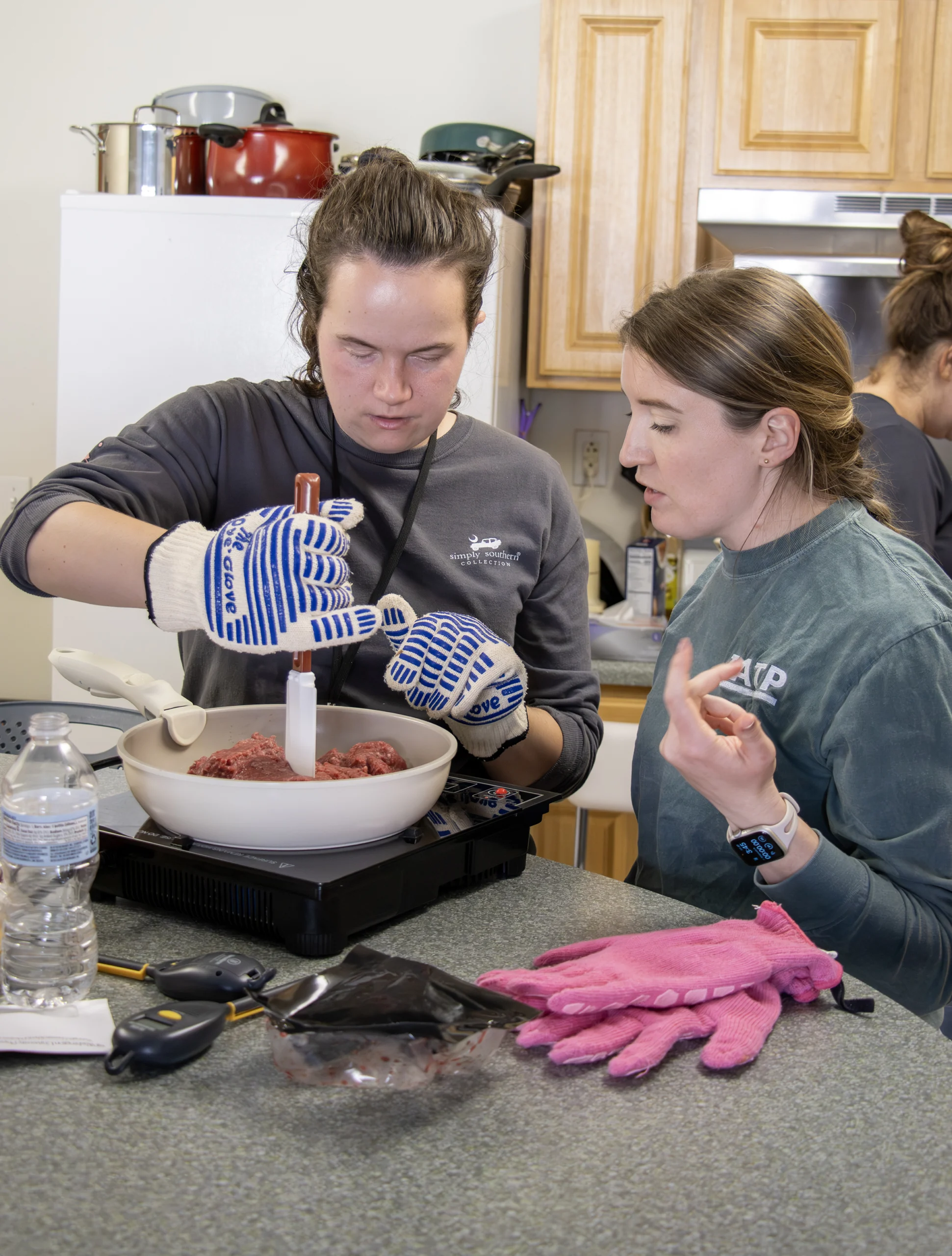
Jac shows Sydney how to brown hamburger Sidney is cooking on an induction burner and using heat resistant gloves
When vision loss occurs early in life, teenagers and young adults often have limited opportunities to gain experience cooking skills. For many college students with visual disabilities, the kitchen can be a stressful place. Family members, teachers, and the students themselves may have fears and anxiety about preparing their own meals and working with potentially dangerous tools like knives and stove tops.
To address this issue, a former customer of the Tech Kitchen Program, now working in the Student Success Center at Southern Illinois University- Edwardsville (SIUE) asked IATP Tech Kitchen staff to come to campus to teach a low vision group cooking class.
After receiving referrals from their DRS Counselors (a requirement to access the full Tech Kitchen Program), Daniel, Kaity, and Sidney participated in the class, which was held on the SIUE campus in a shared dorm kitchen. The group prepared spaghetti with meat sauce, garlic bread, and a chopped salad with support from the IATP Tech Kitchen staff. Basic techniques for knife and heat safety were covered. The students tried various kitchen-related assistive technology (AT) including safety knives, talking thermometers, an induction burner, microwave cookers, and an air fryer.
Throughout the class, the students discussed the tools and techniques. They encouraged and supported each other. Knowing they were not alone as they navigated the complexities of low vision cooking made it much less daunting.
The students demonstrated increased cooking confidence. Using the assistive technology led to the “game changer” realization that kitchen skills were within their reach. After cooking, the students shared the meal. For some, it was the first time they had made an entire (and tasty) meal from scratch; they were all thrilled with what they accomplished. IATP staff will follow up with individual sessions specific to each student as they continue their academic careers or prepare for graduation and employment.
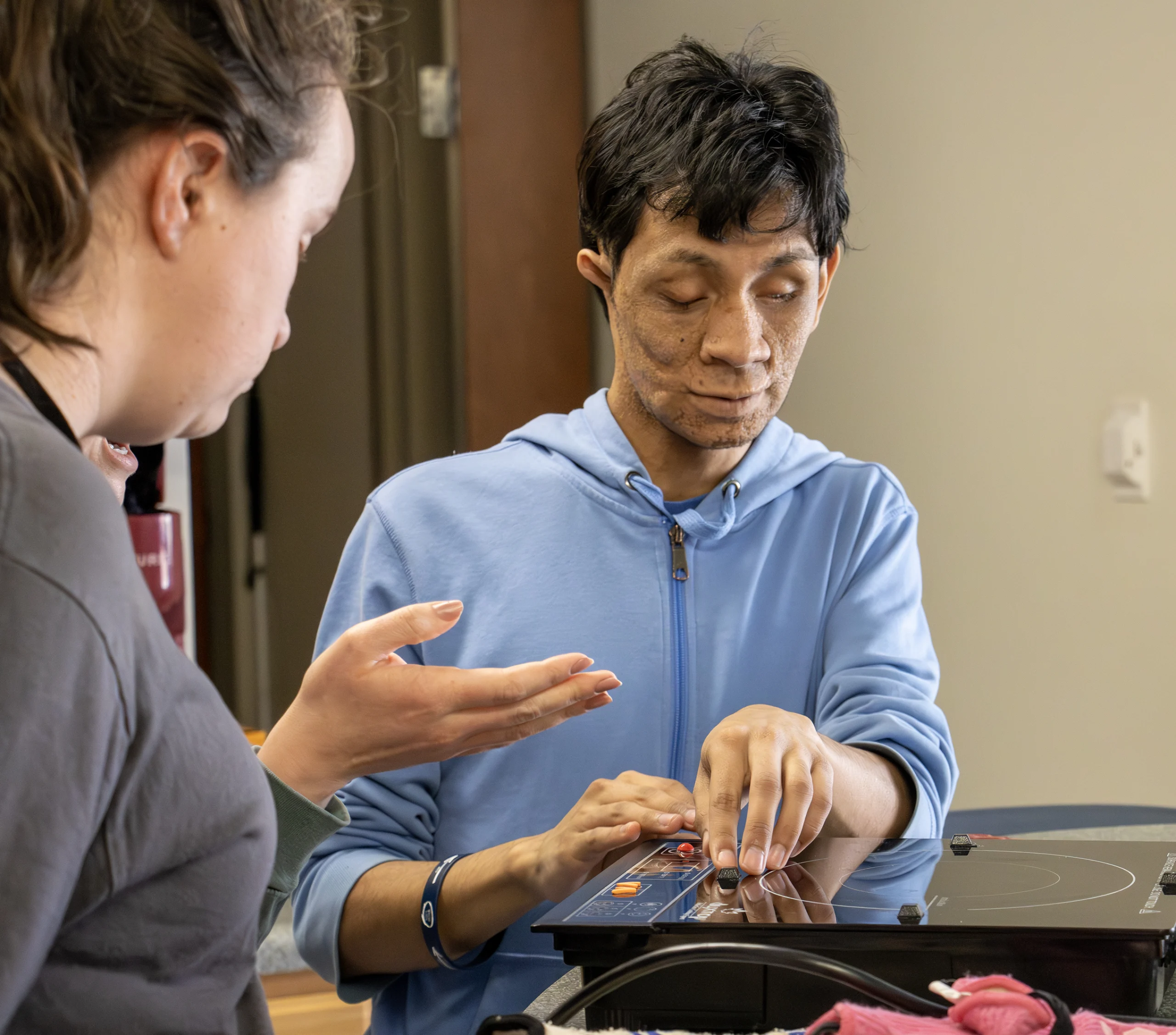
Daniel learns about the controls and tactile markes added to an induction burner
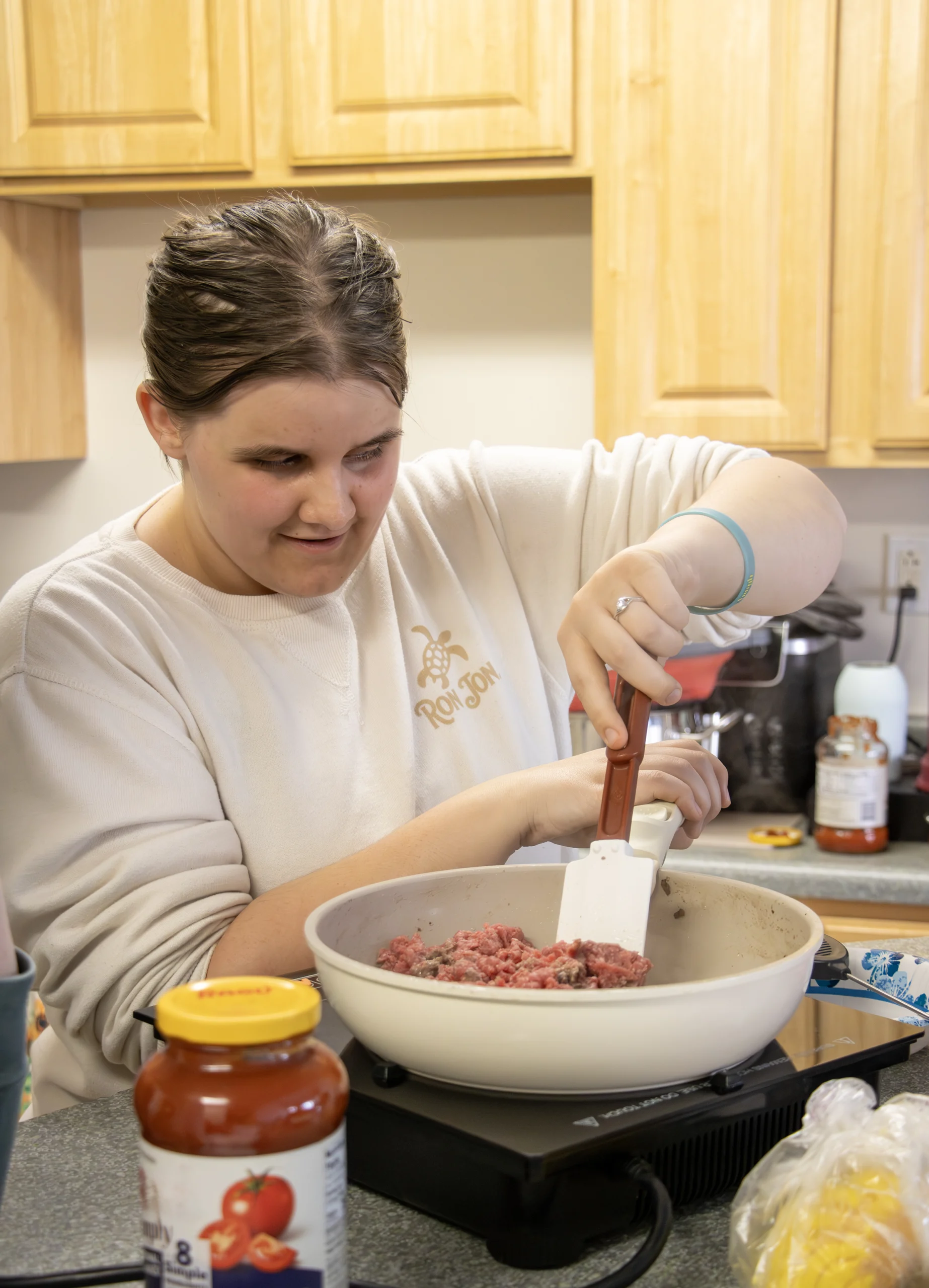
Kaity smiles has she browns hamburger on an induction burner for the first time